Latest Resources

The GLN Focal Point Meeting in Nairobi brought together partners to align priorities and strengthen coordinated advocacy for women’s, children’s and adolescents’ health. The meeting reinforced cross-country learning, political alignment and collective action, highlighting the importance of partnerships and unified strategies to accelerate progress at a critical moment for global health.

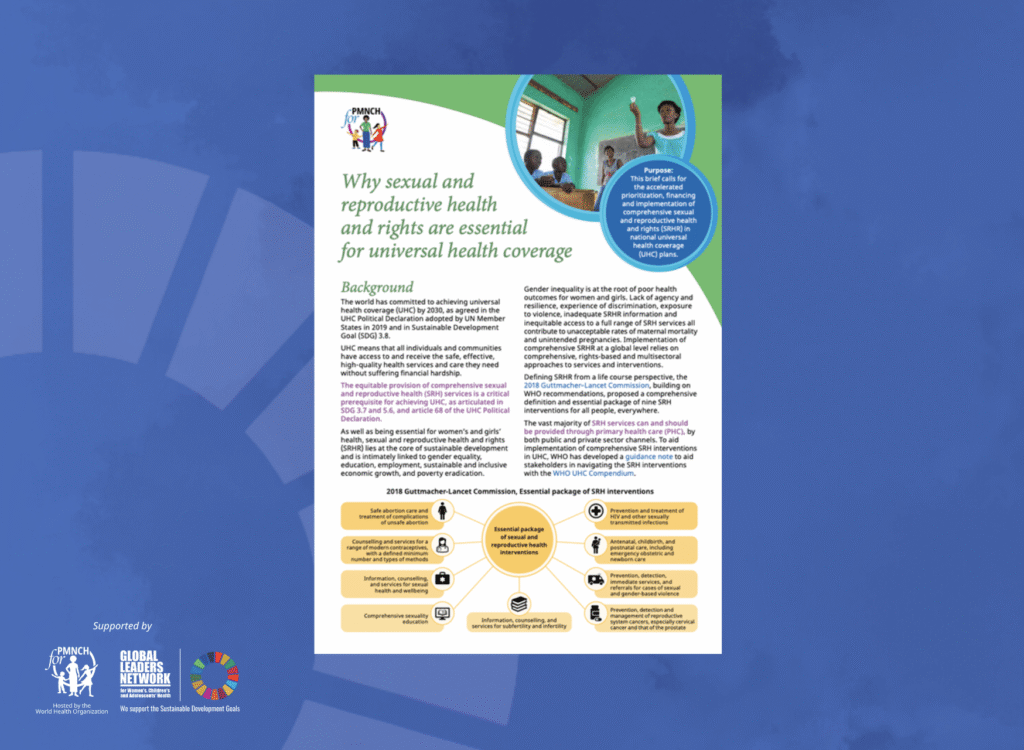
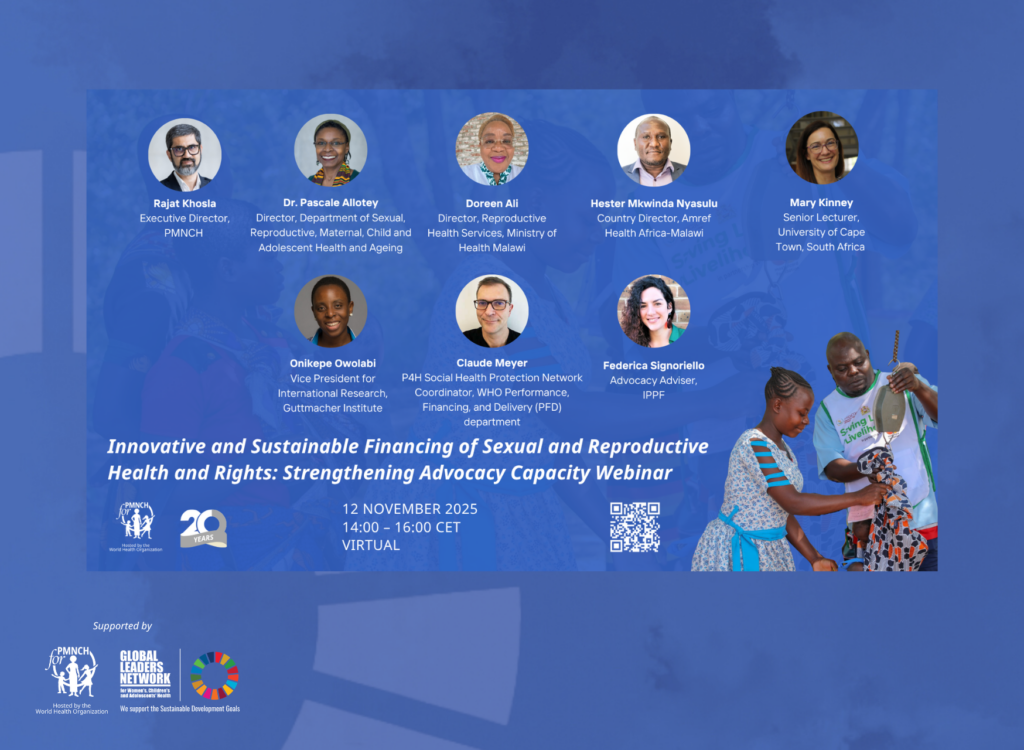
Amid declining health financing and growing pressure on rights, advancing universal health coverage requires renewed focus on sexual and reproductive health. This GLN webinar explores how countries can protect and prioritize SRH within UHC reforms, highlighting the role of domestic resource mobilization, political leadership and strategic benefit packages to safeguard equity, expand access and strengthen health systems in a constrained fiscal context.

Innovative financing is critical to advancing women’s, children’s and adolescents’ health. This presentation highlights how social impact bonds can mobilize private capital and link funding to measurable outcomes, strengthening domestic resource mobilization through cross-sector partnerships and results-based approaches.

Strengthening sexual and reproductive health commodity security is essential to achieving universal health coverage. This Zambia case highlights how increased domestic financing, strategic partnerships and stronger supply chain systems can improve access to essential services, while addressing challenges and building more resilient, data-driven health systems.

Regional leadership and political engagement are critical to advancing women’s, children’s and adolescents’ health. In this interview, Dr. Lwazi Manzi highlights the growing momentum at the African Union, emphasizing the need to translate political will into domestic financing, stronger health systems and effective service delivery, while safeguarding sovereignty and strengthening global health coordination in a shifting geopolitical landscape.

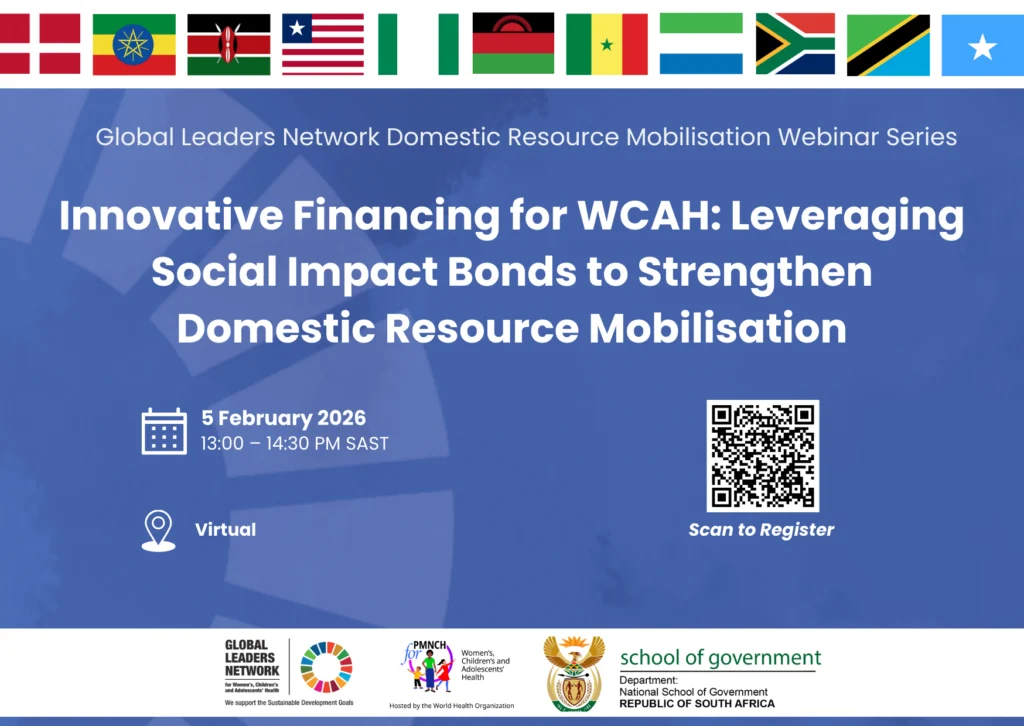
As health financing tightens across LMICs, women’s, children’s and adolescents’ health faces growing risks. This webinar examined Social Impact Bonds as an innovative, results-based financing tool to mobilize domestic investment, shift risk and protect essential WCAH services amid fiscal constraints.

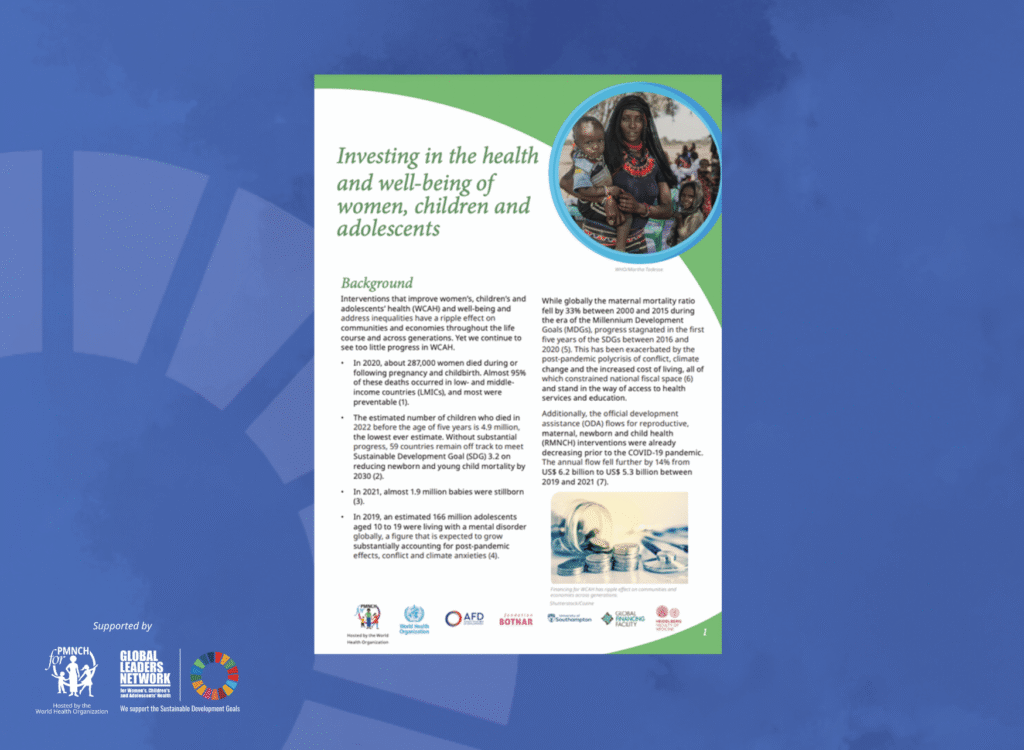
Drawing on experiences from Sierra Leone, Burundi and other LMICs, this report explores how countries are leveraging global financing tools to strengthen health systems, expand fiscal space and institutionalize joint finance–health governance. It underscores accountability, equity and sustained investment in essential WCAH services.

This is a placeholder for design purposes.

Health Minister H.E. Dr. Aaron Motsoaledi explains new developments related to the Global Leaders Network for women’s, children’s, and adolescents’ health that arose from the 39th AU Summit in Addis Ababa.

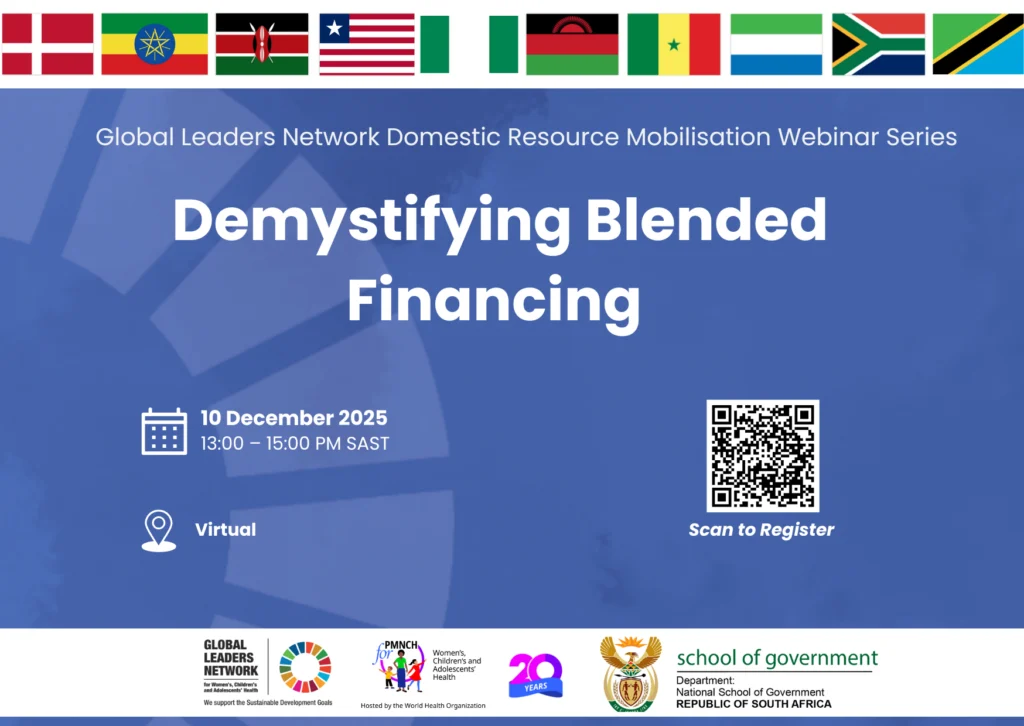
Amid a sharp decline in global health funding, this webinar explored how blended financing can help protect women’s, children’s and adolescents’ health. Participants examined practical tools to mobilize private investment, expand fiscal space and sustain progress toward the SDGs despite shrinking ODA.

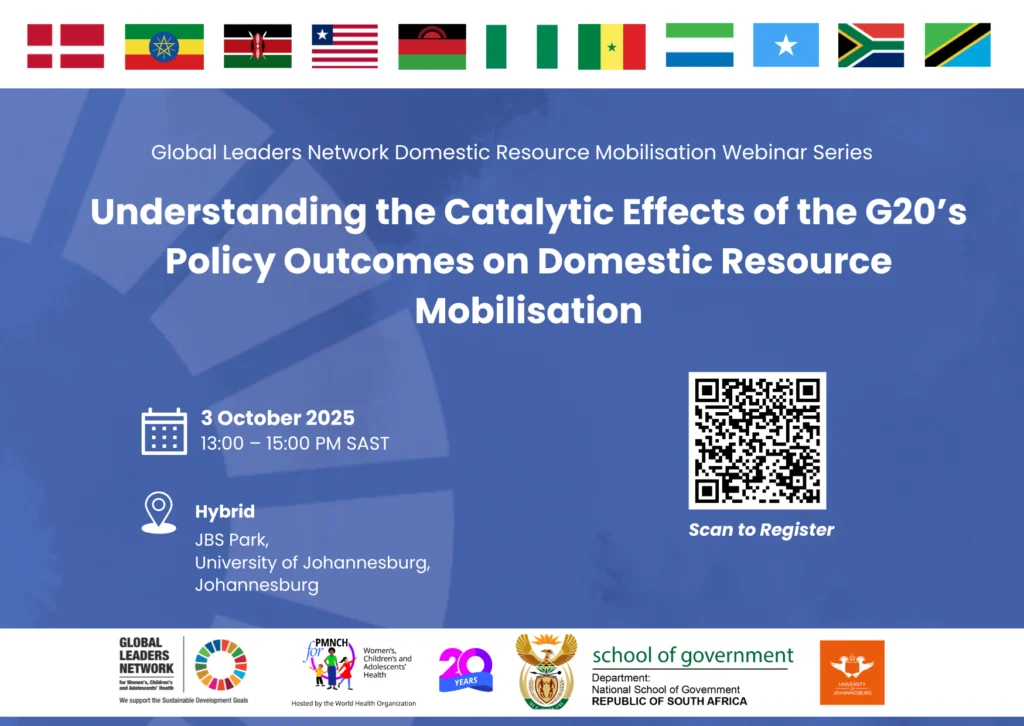
On 3 October 2025, the GLN convened its second DRM webinar to examine how the G20 JFHTF and the Pandemic Fund are catalyzing domestic resource mobilization amid steep ODA cuts. Speakers stressed stronger finance–health collaboration, accountability and positioning WCAH at the core of national budgets and preparedness.

This toolkit captures key insights from the GLN’s second DRM webinar, examining how the G20 Joint Finance and Health Task Force and the Pandemic Fund are catalyzing domestic investment for women’s, children’s and adolescents’ health amid declining ODA. It highlights governance reforms, country experiences and pathways to embed WCAH in national budgets.

This is a placeholder for design purposes.

On 3 October 2025, the GLN convened its second DRM webinar to examine how the G20 JFHTF and the Pandemic Fund are catalyzing domestic resource mobilization amid steep ODA cuts. Speakers stressed stronger finance–health collaboration, accountability and positioning WCAH at the core of national budgets and preparedness.